Forsaken Elegy
3D action RPG with MMO-style mechanics
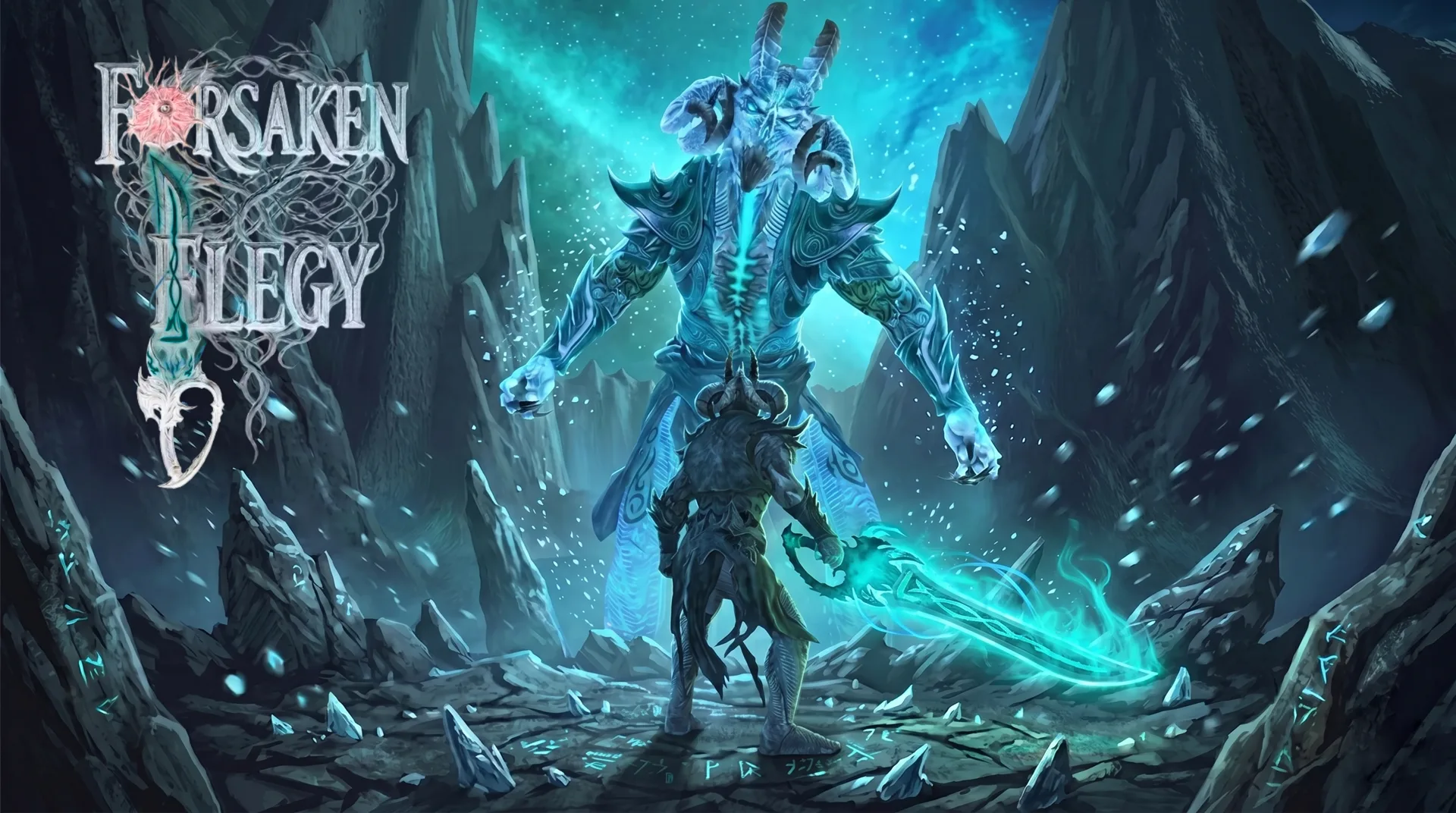
A single-player 3D action RPG with MMO-style raid mechanics, a story and fast-paced combat. Built with Unity and C#.
- Year
- 2026
- Kind
- Game
- Role
- Solo: design, code, effects, animation, music
- Stack
- Unity Engine
- C# Language
- Blender 3D modelling
The idea
Forsaken Elegy is a single-player action RPG built around one boss fight, inspired by the Ultimate raids in Final Fantasy XIV. You play as a demon with no memory, stuck in a desert purgatory. The gatekeeper guarding the only exit can't be beaten at first: you have to explore the world and collect the pages of the Elegy, a book that tells the story, before you stand a chance.
I made it for the Multimedia Applications Lab module in my second year. It was my first 3D game and my first time using a game engine, so I used the module's requirements to make a game I was really passionate about.
Most of the models and some of the effects come from the Unity Asset Store. The rest is mine: the code, the game design, the boss arena, the Elegy itself (a gunblade I modelled because I needed a very specific look), most of the animations, the custom effects and the music.
- 01Unity Engine
The engine: rendering, physics, the Animator, enemy navigation, and VFX Graph for the effects.
- 02C# Language
86 scripts: combat, the boss's timeline, enemy AI, the skill tree, saving, menus and audio.
- 03Blender 3D modelling
The Elegy, the boss arena, smaller props like trees and the pages, and keyframed animations for the player and the boss.
Combat
Combat is built around animation cancelling. Combos (tap, hold, tap-tap-hold) can be cut into abilities and abilities into other abilities, moving interrupts a cast and jumping interrupts a channel. Mastering animation cancelling is how you get the most damage out, which is very important in order to defeat the boss before enrage.
Damage, healing and effects fire on exact frames of each animation. If an animation is cancelled before its hit frame, the script works out how much time was left and queues the hit, so it still lands. Each swing also keeps track of what it already hit, so a big enemy with several colliders only takes the damage once.
In the Animator, every ability goes in through one empty state and out through a clean-up state that clears any inputs mashed during the cast. Without them, idle would need its own arrow to every ability. The graph was dense enough already.
The boss
The fight lasts six minutes and plays out the same way every time. There are seven mechanics: Twista, Fireburst, Pandemonium, Oblivion, Frost Spiral, Ultra Flares and finally Enrage, which throws all of them at you at once. They run on a fixed timeline, so you learn the fight by heart, like a raid.
Every mechanic has a cast bar driven by the boss's animation, so the bar fills exactly when the mechanic starts. I modelled the arena around Ultra Flares, the hardest mechanic: lines of explosions march out from markers, and the pattern on the floor shows which tiles they'll cross. I made the flares and their indicators from scratch in VFX Graph, learning from Gabriel Aguiar's tutorials.
If you walk in before finding the Elegy, the boss takes a tenth of the damage and hits five times harder. You're meant to lose that first visit.
World and story
The story is told mostly through the Elegy. Part of the idea came from "Answers", a song from Final Fantasy XIV whose lyrics explain things the story hadn't revealed yet. The Elegy does something similar: once you've read all of it, the rest of the game makes a lot more sense.
Its seven pages are hidden across a desert of ruins (a graveyard, a palace, a burning village, a forest), each in a place that fits what it tells. Every page also gives skill points for the skill tree, which has damage, defence and healing specialisations. There are never enough points for everything, so you pick a build, and you can change it later. The game saves at every page, and only the area you're in gets rendered, which keeps the frame rate up in fights.
Music
I composed the four tracks of the soundtrack in Dreams, a game that comes with its own music-making tools: Forsaken Elegy (the main theme), Liminality, The Gate and Anamnesis of a Fallen Angel. They share leitmotifs and are mostly choir and synths, with atonal chords in places and no drums at all, which I did on purpose to give them less structure. Bloodborne and Silent Hill were the main references.
Looking back
I was way too ambitious for the time I had, with exams and other projects on top, and the delivery weekend made that very clear. If I did it again, I'd spend less time laying out the open world and more on mechanics. The boss fight is all mechanics, and it's honestly quite fun.
I did consider a Forsaken Elegy 2 in Unreal Engine, mostly to learn Unreal, but the story doesn't really allow a sequel, so I'd rather make a new game.